Braces as a treatment option
Still the most versatile appliance in orthodontics, and for some problems the better choice. What modern braces are, who they suit, and what they cost.
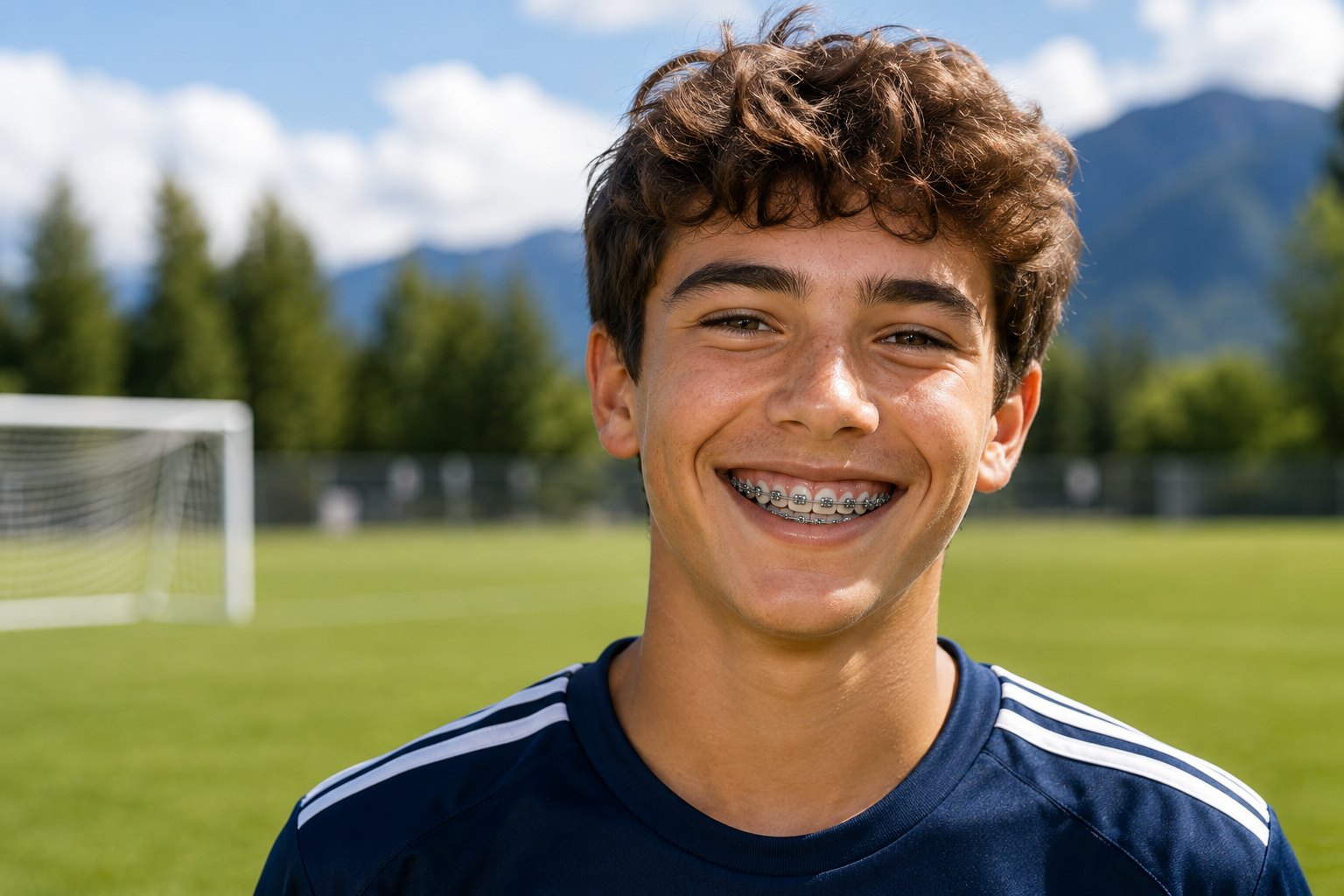
Braces are the original orthodontic appliance and still the most versatile. This page explains what braces are, when an orthodontist is likely to recommend them over aligners, what modern braces are like to live with, and what they cost. It is written for people deciding between options, not as a manual for life with braces; a much deeper braces resource for Maple Ridge families is in development on a companion site.
What braces are
Small brackets bonded to each tooth, connected by a thin wire that is changed and adjusted over the course of treatment. The wire applies continuous light force; the brackets translate that force into precise movements of each tooth, including rotations and root movements that aligners find difficult. Elastics (small rubber bands) are often added to correct how the upper and lower teeth fit together.
Types of braces
- Metal braces. Stainless steel, now much smaller than a generation ago. The most efficient and durable option, and the least expensive. Coloured ties let kids personalize them.
- Clear (ceramic) braces. Tooth-coloured brackets that are far less visible, popular with teens and adults. Slightly larger and more brittle than metal; the ties can stain with coffee or curry. Often used on the upper teeth only, with metal below.
- Self-ligating braces. Brackets with a built-in clip instead of elastic ties. Claims that they shorten treatment have not held up in controlled studies, but some clinicians prefer them for ease of adjustment.
- Lingual braces. Bonded behind the teeth, fully hidden. More expensive, harder to clean and harder on the tongue. Used selectively.
When an orthodontist recommends braces over aligners
- Severe crowding requiring extractions and large space closure.
- Significant rotations of canines or premolars.
- Teeth that need to be moved up or down, or brought down from the gum (impacted canines).
- Complex bite corrections where predictability matters more than appearance.
- Any patient, of any age, who is unlikely to wear aligners at least 20 hours a day. Braces work whether or not the patient remembers them.
Sometimes the recommendation is both: a few months of braces to do the hard movements, then aligners to finish. The choice is explained at the evaluation with your own scan on screen. See Braces vs Invisalign for the full comparison.
This page covers braces as one option among several at our office. For the braces-first deep guide, types compared, costs, food rules and life with brackets, see MapleRidgeBraces.com.
What treatment is like
Braces go on in one appointment of about an hour. Teeth are tender for three to five days, managed with soft food and acetaminophen or ibuprofen. Lips and cheeks toughen within two weeks; orthodontic wax covers any rough spots in the meantime. Adjustment visits are spaced several weeks apart and are usually short.
Hard, sticky and crunchy foods break brackets, so popcorn, hard candy, whole apples and corn on the cob are off the menu, and everything else is cut smaller. Brushing takes longer and matters more; white marks left after braces come off are caused by plaque sitting around brackets, not by the braces themselves, and they are permanent.
Braces come off in a single appointment, and a retainer is provided so the teeth are held from the start; your long-term retainers follow. The retainers page explains the wear schedule.
How long braces take
Comprehensive treatment commonly runs 12 to 24 months, with extraction cases and significant bite corrections at the longer end and simple alignment at the shorter end. Broken brackets and missed appointments are the two most common reasons treatment runs over.
Cost
The fee for comprehensive braces depends on the diagnosis, complexity and treatment length, and ceramic and lingual braces cost more than metal. At myORTHODONTIST Maple Ridge the quoted fee includes adjustments, retainers and the first year of retainer checks; the clinic bills insurance directly and offers interest-free monthly plans. See cost and insurance.
Braces for children, teens and adults
Partial braces on the front teeth are one of the tools used in Phase 1 treatment for children aged 7 to 10. Teens remain the largest group of braces patients, and the compliance-free nature of braces is a real advantage for busy teenagers. Adults choose braces less often but for good reasons, usually complexity; see adult orthodontics.
If something breaks
A loose bracket or poking wire is uncomfortable but rarely urgent. The emergencies and comfort page explains what to do at home and when to call the clinic.
Common questions
Are braces better than Invisalign?
For some problems, yes: severe rotations, vertical movements, impacted teeth and large extraction cases are more predictable with braces. For patients unlikely to wear aligners at least 20 hours a day, braces are also the better choice. For many other cases, both work.
Do braces hurt?
Teeth are tender for three to five days after braces go on and for a day or two after adjustments. Cheeks and lips toughen within about two weeks. Wax and over-the-counter pain relief manage the rest.
How long do braces take?
Commonly 12 to 24 months for comprehensive treatment. Extraction cases and major bite corrections take longer; simple alignment is shorter. Broken brackets and missed appointments are the main causes of delay.
What can't you eat with braces?
Hard, sticky and very crunchy foods: popcorn, hard candy, ice, whole apples and corn on the cob. Most other foods are fine cut into smaller pieces.
How much do braces cost in Maple Ridge?
The fee depends on the diagnosis, how complex the bite problem is, the type of braces and how long treatment takes; ceramic and lingual braces cost more than metal. myORTHODONTIST Maple Ridge quotes the full fee in writing at a complimentary evaluation, includes retainers, and bills insurance directly.
Ready to find out what your options are?
Complimentary evaluations for children, teens and adults at myORTHODONTIST Maple Ridge on Dewdney Trunk Road. No referral needed.