BSSO: repositioning the lower jaw
The standard operation for moving the lower jaw forward or back, and the questions worth asking before you consent to it.
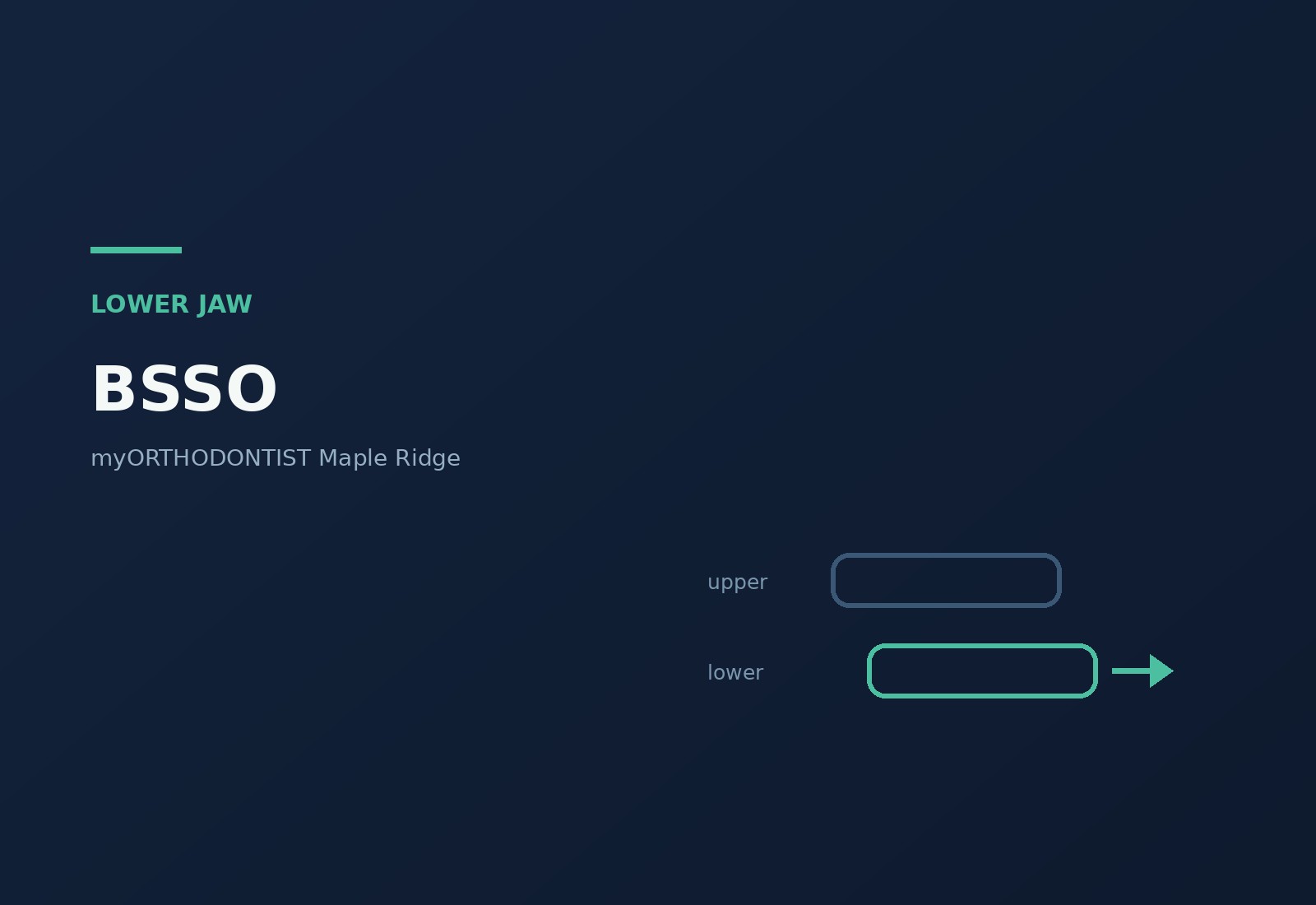
The bilateral sagittal split osteotomy, always shortened to BSSO, is the standard operation for repositioning the lower jaw. It has been in use since the 1950s and refined continuously since, and it is one of the most predictable procedures in facial surgery.
What the operation does
The surgeon splits each side of the lower jaw lengthwise, in the region behind the molars, so that the tooth-bearing front portion can slide independently of the portion carrying the jaw joint. Because the split is lengthwise rather than straight across, the two pieces overlap over a broad surface, which is why it heals well and holds its position. Plates and screws fix the result. The incisions are inside the mouth; there is no external scar.
Advancement and setback
Advancement moves the lower jaw forward. This is the more common direction, used for a retruded lower jaw where the chin sits back and the overjet is large. It opens the space behind the tongue, which is why the same movement appears in sleep apnea surgery.
Setback moves the lower jaw back, for a skeletal underbite where the lower jaw has outgrown the upper. In practice many underbites are corrected by advancing the upper jaw instead, or by moving both, because a large setback can crowd the airway. That is a decision the surgeon and orthodontist make together, and it is one worth asking about directly if you have any history of snoring or disturbed sleep.
Genioplasty, and why it is a separate question
The chin point can be cut and repositioned independently of the jaw, in an operation called a genioplasty or sliding genioplasty. It changes the profile without changing the bite. It is often added to a BSSO because the amount of chin projection that looks balanced is not always the amount that follows from correcting the bite. It is worth understanding that these are two different goals, one functional, one aesthetic, being addressed in the same anaesthetic.
The nerve conversation
The inferior alveolar nerve, which supplies sensation to the lower lip, chin and lower teeth, runs through the lower jaw directly across the surgical field. Some altered sensation afterwards is expected rather than exceptional. Most of it resolves over weeks to months. A minority of patients, the figure varies by study, by the size of the movement and by patient age, retain some permanent numbness or altered feeling in the lower lip or chin.
This is not a complication to be glossed over, and it is the single thing we most want patients to have understood before consenting. It does not affect movement of the lip, only sensation. Ask your surgeon for their own figures.
Recovery
One to two nights in hospital. Swelling peaks in the first few days. A liquid then soft diet for several weeks, guided elastics rather than wired jaws, and typically two to four weeks off work or school. Chewing strength returns gradually over months. Jaw physiotherapy is sometimes prescribed.
Relapse, honestly
Large advancements, open bite corrections and cases with jaw joint problems carry more relapse risk than straightforward setbacks. Modern rigid fixation has reduced this considerably compared with older techniques. Wearing retainers and following the elastic instructions afterwards genuinely matters, see why retainers matter.
Where orthodontics fits
Braces before, to position the teeth over their own jaw bases. Braces after, to settle the bite. The pre-surgical phase can make the bite look temporarily worse, and knowing that in advance makes it much easier to live with. See orthognathic surgery for the full sequence, and Le Fort I for the upper jaw operation that BSSO is often combined with.
What it costs in British Columbia
The surgery itself, surgeon and hospital, is generally covered by MSP when it is medically required and performed in hospital. Your oral and maxillofacial surgeon's office confirms that for your case. The orthodontic treatment before and after surgery is not covered by MSP; we quote that at your evaluation and offer an interest-free monthly plan through the clinic. Full detail on the orthognathic surgery page and in cost and insurance.
Common questions
What does BSSO stand for?
Bilateral sagittal split osteotomy. Each side of the lower jaw is split lengthwise behind the molars so the tooth-bearing portion can be moved independently of the portion carrying the jaw joint, then fixed with plates and screws.
Is lip numbness after BSSO permanent?
Usually not. The nerve supplying sensation to the lower lip and chin runs directly through the surgical field, so some altered sensation afterwards is expected. Most of it resolves over weeks to months, but a minority of patients retain some permanent numbness. It affects sensation only, not movement. Ask your surgeon for their own figures.
What is a genioplasty and do I need one?
A separate procedure that repositions the chin point without changing the bite. It is often combined with BSSO because the chin projection that looks balanced is not always the one that follows from correcting the bite. It addresses appearance rather than function, so it is worth deciding on deliberately.
Can BSSO setback affect my breathing?
Moving the lower jaw backward can reduce the space behind the tongue, so surgeons weigh this carefully, particularly in anyone with a history of snoring or disturbed sleep. Many underbites are corrected by advancing the upper jaw instead, or by moving both jaws. Raise any sleep symptoms during planning.
How long until I can eat normally after BSSO?
A liquid then soft diet for several weeks, with chewing strength returning gradually over months. Jaws are guided with elastics rather than wired shut in modern practice.
Ready to find out what your options are?
Complimentary evaluations for children, teens and adults at myORTHODONTIST Maple Ridge on Dewdney Trunk Road. No referral needed.