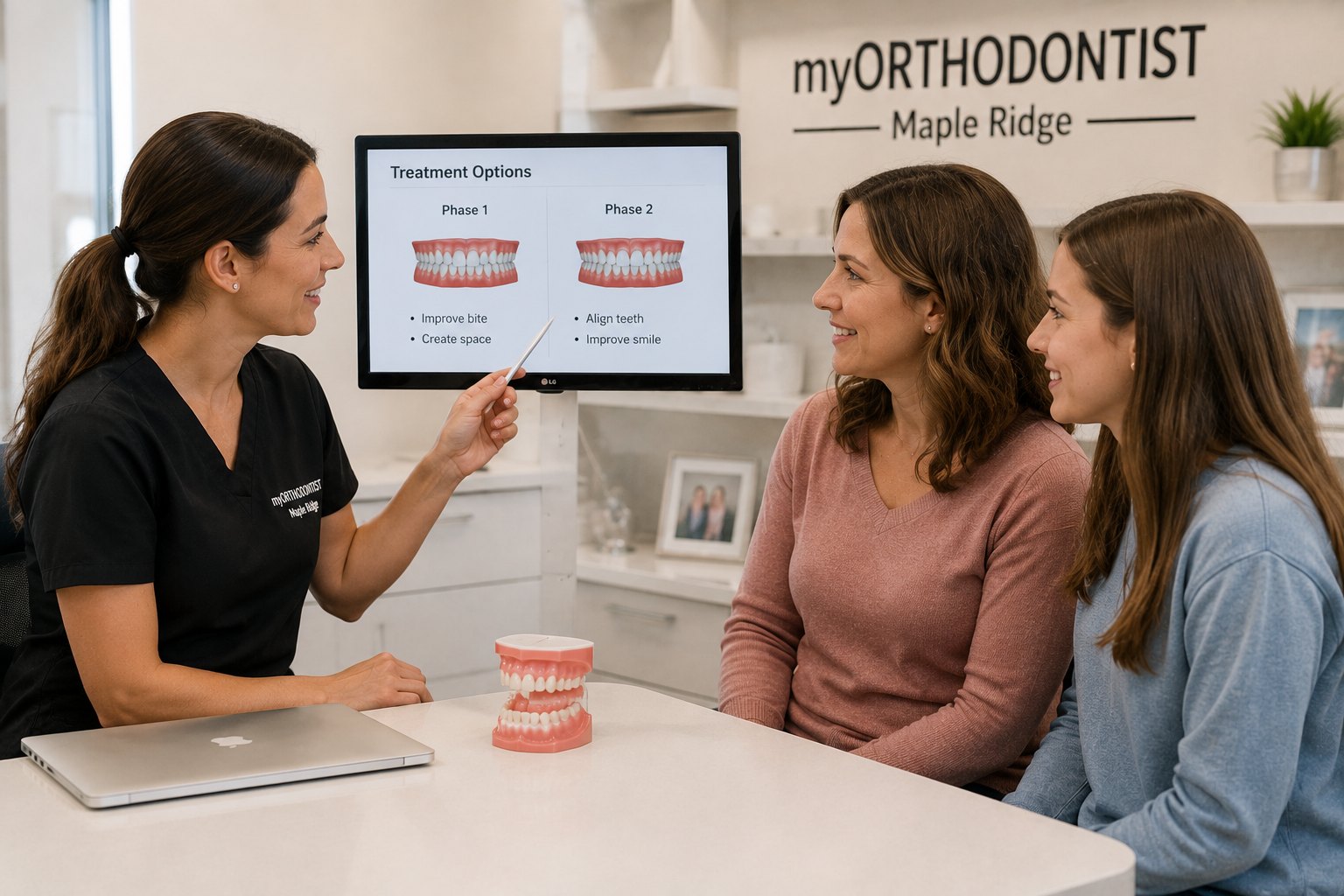
Two-phase treatment means orthodontic care split into an early phase while a child still has baby teeth, a rest period, and a second phase once the adult teeth are in. Its purpose is to guide jaw growth while growth is still happening, so that the second phase has a sound foundation to work with. This page explains who benefits, why, and what to ask.
The structure
| Phase | Age | Duration | Goal |
|---|---|---|---|
| Phase 1 (interceptive) | 7 to 10 | 9 to 15 months | Correct a specific growth or bite problem; create space; reduce injury risk |
| Rest / observation | 10 to 12 | 1 to 3 years | Hold the result with a retainer while adult teeth erupt; recall visits every 6 to 12 months |
| Phase 2 (comprehensive) | 11 to 15 | 12 to 18 months | Align all the adult teeth and finalize the bite with braces or aligners |
Who benefits
The children for whom two phases produce a better result than one are those with a problem that gets harder or impossible to fix once growth is finished: crossbites with a jaw shift, underbites, very narrow upper jaws, protruding front teeth at high risk of injury, and some impacted-tooth situations. For these children Phase 1 changes what is possible in Phase 2, sometimes avoiding extractions or surgery.
Who does not
Children with mild crowding, spacing or overbites that are not causing harm, whose jaws are well proportioned, and who will be fully treatable at 12. For these children a single phase at the right time gives the same result with less time in appliances. Phase 1 should be recommended for a reason the orthodontist can name, and parents should feel free to ask for it.
Questions to ask before agreeing to Phase 1
- What is the specific problem, and what happens to it if we wait until 12?
- Will Phase 1 make Phase 2 shorter, simpler, or unnecessary? Which one?
- How long is the rest period likely to be, and what does my child wear during it?
- Is the Phase 1 fee credited toward Phase 2? What is the estimated total for both?
- How much of my insurance lifetime maximum will Phase 1 use?
How myORTHODONTIST Maple Ridge approaches it
The clinic believes strongly in growth modification: setting the jaw foundation correctly while a child is growing, so that the adult teeth have room and the jaws are proportioned. The aim is a stable, well-supported result with the best chance of avoiding extractions and jaw surgery later, and a better airway along the way. Dr. Haerian Ardekani's clinical background includes interceptive treatment and functional appliances, and both orthodontists plan two-phase care when the growth pattern calls for it. When it does not, children are placed on free recall and watched, which is still the most common outcome of a first visit at 7.
Related reading
Early treatment (Phase 1) in detail, signs your child may benefit from Phase 1, and crowded teeth in a 7-year-old: wait or treat?
Common questions
Is two-phase treatment more expensive than one phase?
Usually the total is somewhat higher than a single comprehensive phase. Many clinics credit the Phase 1 fee toward Phase 2; ask before starting.
How long is the rest period between phases?
Typically one to three years, until enough adult teeth have come in for comprehensive treatment. A retainer holds the Phase 1 result during this time.
Can Phase 1 replace Phase 2 entirely?
Occasionally, in mild cases, but parents should expect a second phase. An office that promises Phase 1 will avoid braces should be asked to explain how.
Ready to find out what your options are?
Complimentary evaluations for children, teens and adults at myORTHODONTIST Maple Ridge on Dewdney Trunk Road. No referral needed.