Sleep and breathing orthodontics
Assessment, referral pathways and where orthodontic treatment fits alongside physicians, ENT and sleep medicine.
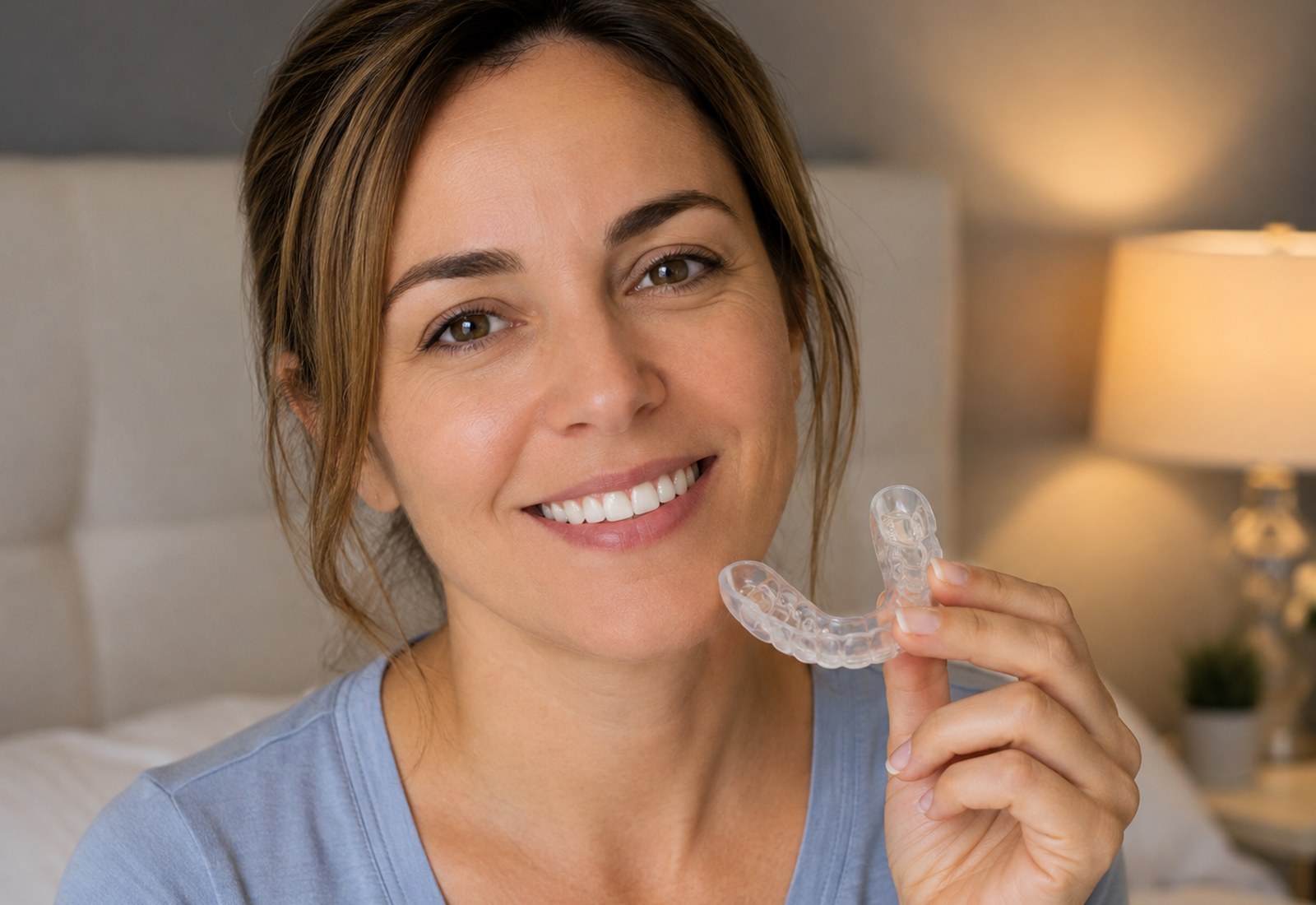
This page describes how sleep and breathing concerns are assessed at an orthodontic office, what the treatment pathways look like for children and adults, and how orthodontic care works alongside physicians, ENT specialists and sleep medicine. The role of orthodontics is patient-specific: for some it is central, for others supporting, and the assessment is what tells the difference.
Children
Assessment
Every child seen at myORTHODONTIST Maple Ridge is screened with a short sleep and breathing questionnaire, a check of tonsil size, nasal breathing, palate shape and facial growth pattern, and the panoramic and cephalometric x-rays that are part of orthodontic records. The x-rays give a view of the adenoids and the airway behind the palate and tongue that helps guide referral and planning.
Pathways
- Suspected sleep-disordered breathing: referral to the family physician, often onward to ENT, alongside orthodontic assessment. Enlarged tonsils and adenoids are commonly involved and may need to be addressed; a narrow palate or set-back lower jaw is the orthodontist's part of the same problem, and the two are often treated together.
- Narrow upper jaw with or without crossbite: palatal expansion, ideally before the mid-palatal suture fuses, after it does, an adult needs MARPE or SARPE instead. It creates room for the teeth and widens the nasal floor, and in the right child the breathing benefit is a primary reason to treat; the research is summarised on the airway orthodontics page.
- Lower jaw set back with a deep bite: a functional appliance during growth may enlarge the space behind the tongue as well as correcting the bite.
- Habit and posture: thumb sucking, low tongue posture and lip incompetence are addressed with appliances and, where useful, referral to an orofacial myofunctional therapist.
Persistent snoring, witnessed pauses or significant daytime symptoms should be assessed by a physician, and a sleep study is how sleep apnea is diagnosed in a child. Orthodontic assessment runs alongside, because the jaw foundation that orthodontics can influence is part of the same picture.
Adults
Assessment
Adults are asked about snoring, sleep quality, daytime sleepiness and any existing diagnosis. Screening questionnaires such as STOP-BANG identify who should be referred for a sleep study. The orthodontist does not diagnose sleep apnea.
Pathways
- Diagnosed mild to moderate sleep apnea, or CPAP intolerance: a mandibular advancement device, a custom oral appliance that holds the lower jaw forward during sleep, can be made after the physician's diagnosis and with their agreement. Follow-up sleep testing confirms it is working. These devices can move teeth over years, so an orthodontic assessment before and during use matters.
- Severe apnea with a small or set-back lower jaw: surgical advancement of the jaws, combined with orthodontics, is one of the most effective treatments and is planned with an oral and maxillofacial surgeon.
- Orthodontic treatment for other reasons in an adult with breathing concerns: planning avoids choices that reduce tongue space, and aligner or braces treatment proceeds normally.
What to bring to an appointment
Any sleep study report, a note of who your family physician is, and, for children, a description of what a typical night looks like: snoring, position, restlessness, waking. A short phone video of your child asleep is often more useful than a description.
Related pages
Airway orthodontics explained, snoring in kids is not normal, mouth breathing in children, and TMJ and jaw pain, which often overlaps with clenching and poor sleep in adults.
Common questions
What is a mandibular advancement device?
A custom oral appliance worn during sleep that holds the lower jaw slightly forward to keep the airway open. It is an accepted treatment for mild to moderate sleep apnea and for CPAP intolerance, made after a physician's diagnosis.
Who should my child see first about snoring?
Your family physician, who can examine the tonsils and adenoids and arrange a sleep study or ENT referral. An orthodontic assessment can happen alongside.
Do sleep appliances move teeth?
Over years of nightly wear they can. An orthodontic assessment before and periodically during use catches this early.
Ready to find out what your options are?
Complimentary evaluations for children, teens and adults at myORTHODONTIST Maple Ridge on Dewdney Trunk Road. No referral needed.