TMJ and jaw pain
Clicking, aching and clenching are common. Most cases settle with conservative care; some are bite-related, and here is how to tell.
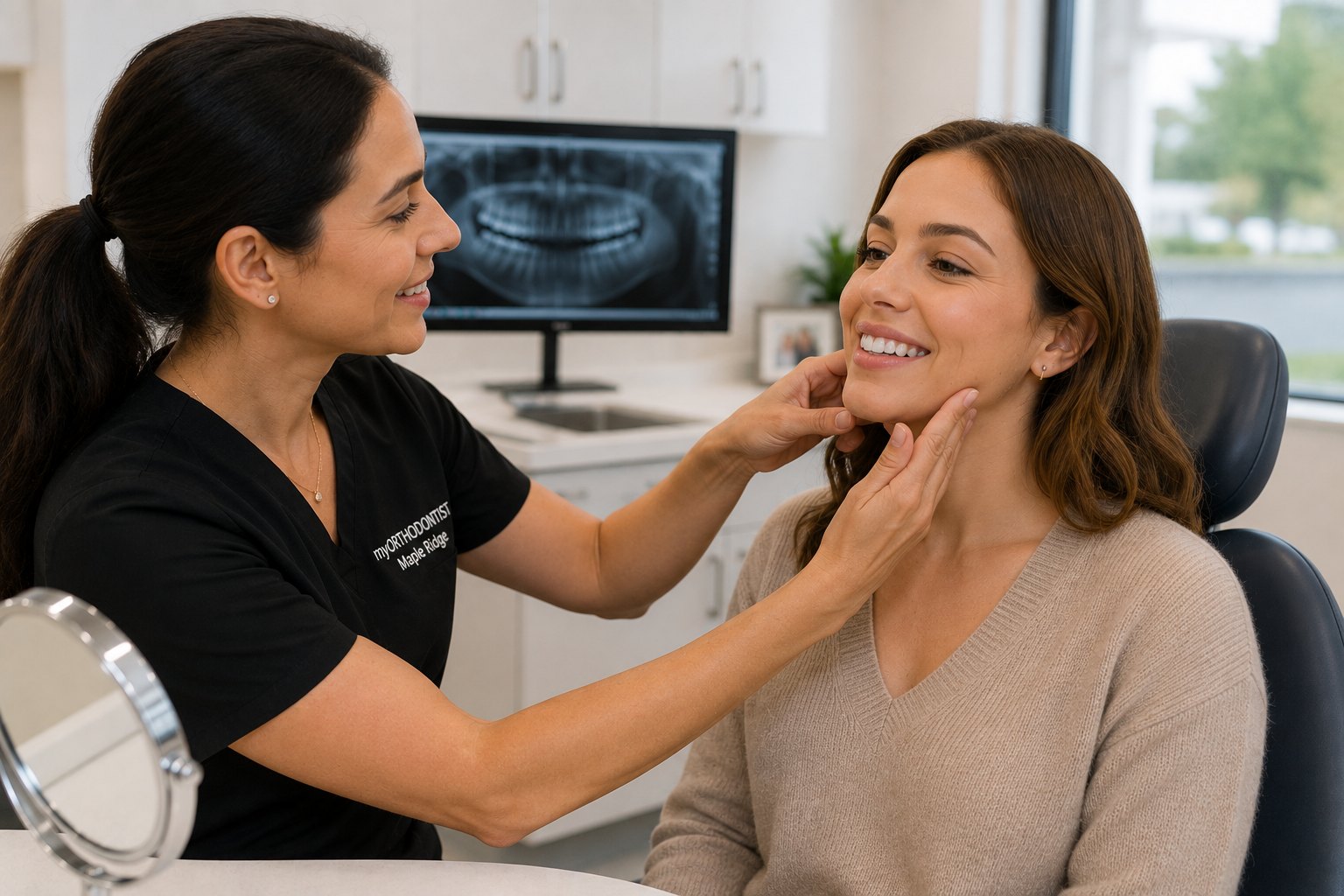
The temporomandibular joints connect the lower jaw to the skull, just in front of each ear. Problems with them and the surrounding muscles are grouped as temporomandibular disorders, or TMD, and they are common: clicking, popping, aching, tiredness in the jaw, headaches at the temples, limited opening. This page explains what an orthodontist can and cannot do about them, because the honest answer is more limited than many websites suggest.
Common symptoms
- Clicking or popping when opening or chewing, with or without pain
- Aching in the jaw, temples or in front of the ear, often worse in the morning
- Jaw that locks open or closed, or opens crookedly
- Tooth wear, flattened or chipped edges, from clenching or grinding
- Ear fullness or ringing without an ear problem
What causes it
Most TMD is muscular: clenching and grinding, often linked to stress, poor sleep or sleep-disordered breathing, overload the jaw muscles and joints. A smaller share involves the disc inside the joint slipping out of position, which is the usual source of clicking. Arthritis, injury and growth disturbances account for the rest. The relationship between bite and TMD is weaker than was once believed; many people with poor bites have healthy joints and many with perfect bites have TMD.
What orthodontics does and does not do for TMD
Orthodontics is not a general cure for TMD, but it can help when the bite is part of the problem. Most jaw pain is muscular and responds to conservative care regardless of the bite. Where symptoms are clearly linked to how the teeth meet, for example a deep bite that drives the jaw back, a crossbite that shifts the jaw to one side, or a bite that only touches on a few teeth, correcting the occlusion can improve certain signs and symptoms. The assessment is what tells the two apart, and any recommendation to treat jaw pain with orthodontics should come with a clear explanation of the bite finding behind it.
What an orthodontist does do:
- Assess the joints, muscles and bite as part of every evaluation, and recognize TMD before starting tooth movement, because active symptoms should be settled first.
- Treat the muscles and habits with conservative care: a night guard or stabilization splint, jaw exercises, heat, soft diet during flare-ups, and coaching on clenching awareness. This resolves the large majority of cases.
- Look for sleep-breathing contributors. Night-time clenching is strongly associated with sleep-disordered breathing. Screening and referral can change the picture.
- Refer when symptoms are severe, persistent or the joint itself is damaged, to an oral medicine specialist, physiotherapist, oral surgeon or physician.
- Correct occlusion-related contributors where the assessment identifies them, and coordinate orthodontics for patients with stable TMD who need alignment for other reasons, choosing mechanics that do not load the joints.
Painless clicking
A click without pain or locking generally needs no treatment. It reflects a disc that has shifted position, and for most people it stays that way for life without consequence. Monitor it; treat it only if pain, locking or limited opening develop.
What you can do at home during a flare-up
- Soft foods for a week; avoid gum, wide yawns, and biting into apples or sandwiches
- Warm compresses on the jaw muscles, 10 to 15 minutes, a few times a day
- Tongue-to-palate rest posture: lips together, teeth apart, tongue on the roof of the mouth
- Over-the-counter anti-inflammatories for a few days, if you can take them
- Note when it is worse: mornings suggest night clenching; evenings suggest daytime habits
Seek prompt care if the jaw locks, if pain is severe, or if you have swelling, fever, or a recent injury.
Related reading
TMJ pain and your bite: when jaw clicking is worth a visit, and sleep and breathing for the clenching connection.
Common questions
Will braces or Invisalign fix my jaw pain?
It depends on the cause. Most jaw pain is muscular and settles with conservative care such as a night guard, exercises and habit awareness. Where symptoms are linked to the bite, correcting the occlusion can improve certain signs and symptoms. An assessment identifies which applies to you.
Is jaw clicking dangerous?
Painless clicking generally needs no treatment and usually stays stable for life. Seek care if pain, locking or limited opening develops.
What is the difference between a night guard and a splint?
Both are custom appliances worn at night. A simple night guard protects teeth from grinding; a stabilization splint is designed to relax the jaw muscles and unload the joints. The orthodontist chooses based on the diagnosis.
Ready to find out what your options are?
Complimentary evaluations for children, teens and adults at myORTHODONTIST Maple Ridge on Dewdney Trunk Road. No referral needed.