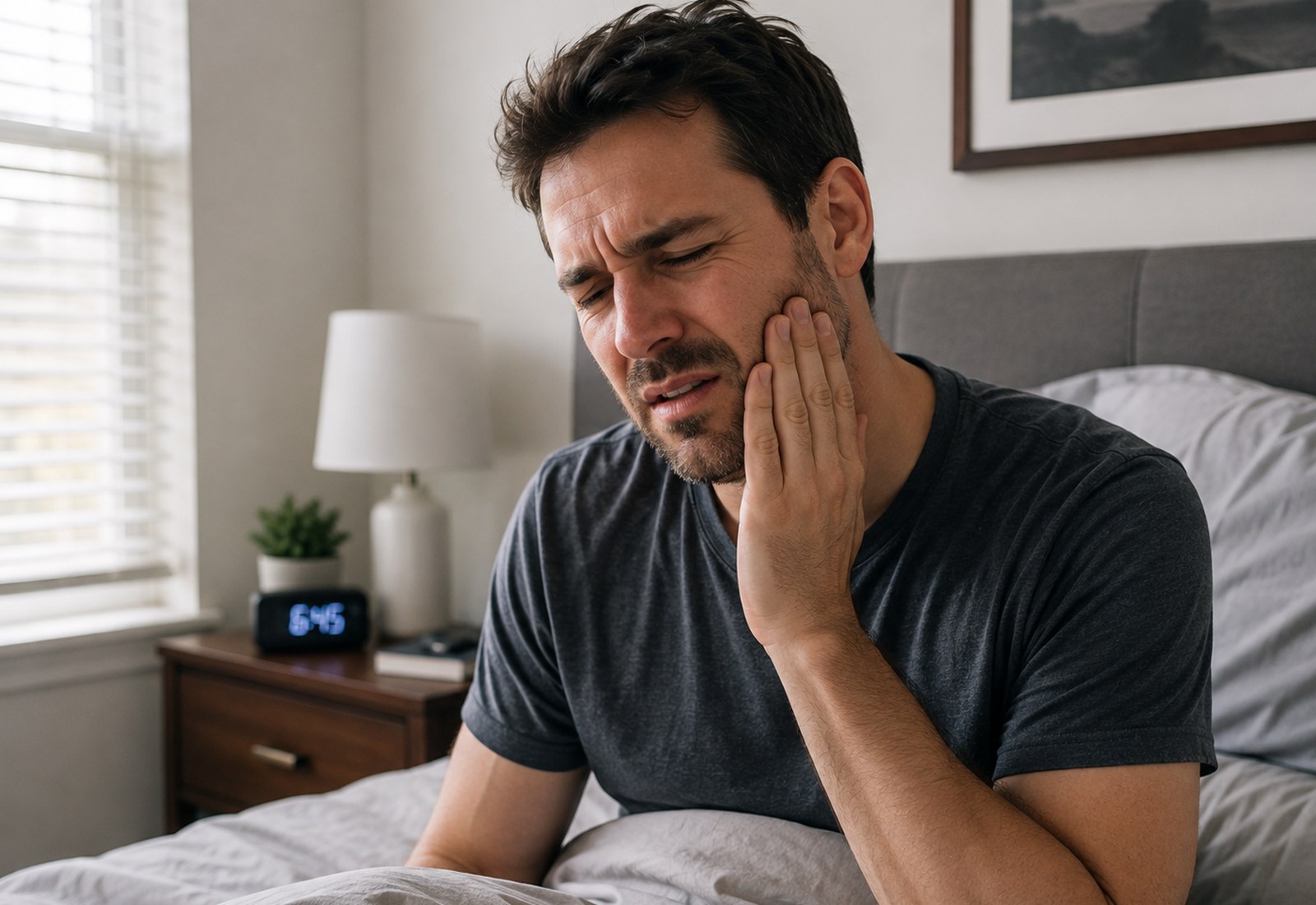
Four situations
Clicking without pain. Common, and usually the disc inside the joint sitting slightly forward. In most people it stays like that for life without consequence. No treatment; mention it at check-ups.
Clicking with pain, or pain without clicking. Usually the jaw muscles, overloaded by clenching or grinding. Worth a visit if it lasts more than a couple of weeks or keeps returning.
Locking. The jaw catching open or closed, or opening less than three fingers' width. Seek care promptly.
Morning ache, temple headaches, worn teeth. Night-time clenching, often linked to stress or to sleep-disordered breathing. Worth assessing for both the jaw and the sleep.
What the bite has to do with it
Less than was once thought, and more than nothing. Most jaw pain is muscular and settles with conservative care whatever the bite. But some bites load the joints unevenly: a deep bite that drives the lower jaw back, a crossbite that shifts it to one side, a bite where only a few teeth touch. In those cases correcting the occlusion can improve certain signs and symptoms, and the assessment identifies whether yours is one of them. See TMJ and jaw pain for the clinic's approach.
Conservative care first
A night guard or stabilization splint, jaw exercises, heat, a soft diet during flare-ups, awareness of daytime clenching, and attention to sleep. This resolves the large majority of cases within weeks to months. Screening for snoring and sleep apnea matters, because treating the breathing often treats the clenching.
When to seek help now
Locking, severe pain, swelling, fever, a recent blow to the jaw, or pain that is getting steadily worse. See your dentist, orthodontist or physician.
Ready to find out what your options are?
Complimentary evaluations for children, teens and adults at myORTHODONTIST Maple Ridge on Dewdney Trunk Road. No referral needed.