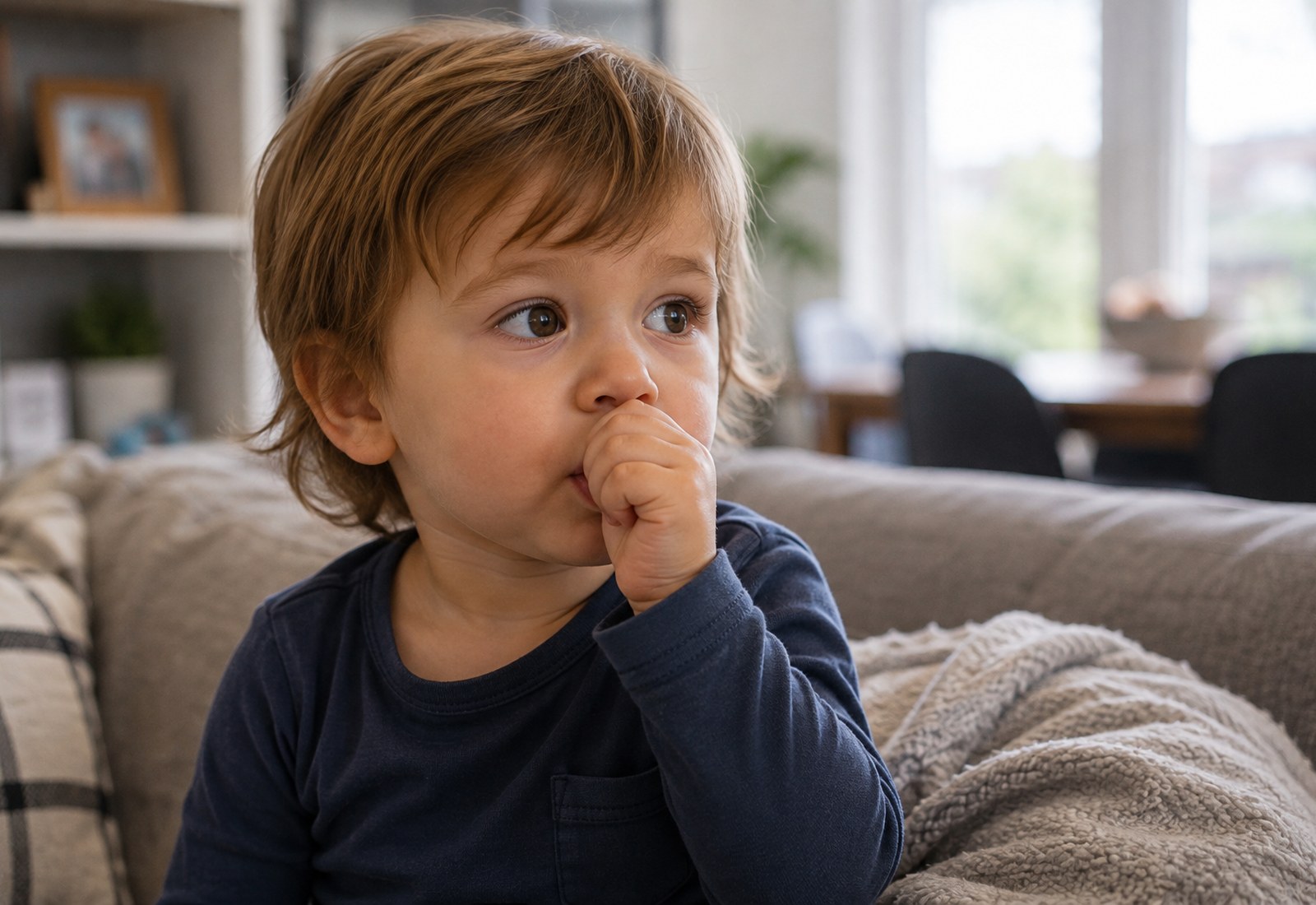
Sucking is a normal reflex in babies and toddlers and most children stop on their own between 2 and 4. When it continues past about 4, and especially once the adult front teeth begin to come in at 6 or 7, it starts to change how the jaws and teeth grow.
What it does
A thumb or soother pushes the upper front teeth forward and the lower front teeth back, holds the tongue low, and pulls the cheeks in. Over time this produces an open bite (the front teeth do not meet), a large overjet (upper teeth well ahead of the lower), and a narrow upper jaw. The tongue may then push through the gap when swallowing, which keeps the open bite going after the habit stops.
Thumb versus soother
Similar effects, but a soother is easier to stop: you can take it away. Orthodontic soothers reduce but do not eliminate the effect. Aim to retire the soother by 3 and certainly before 4.
Helping a child stop
- Notice when it happens: tired, bored, anxious, falling asleep. Address the trigger.
- Praise the times it does not happen rather than punishing the times it does. Sticker charts work for many 4 to 6 year olds.
- A bandage or a bitter-tasting nail product can be a reminder for a child who wants to stop but does it unconsciously.
- At night, a sock or a soft glove for a few weeks.
- Involve the dentist or orthodontist. A gentle explanation from a professional lands differently than one from a parent.
When an orthodontist helps
If the habit persists past 6 or 7 with a visible open bite or overjet, a small fixed habit appliance behind the upper front teeth makes sucking unsatisfying and usually ends it within weeks. It is fitted as part of early treatment, sometimes with expansion if the upper jaw has narrowed. In most children the open bite closes on its own once the habit stops and the tongue posture corrects; a myofunctional therapist can help with the tongue where it does not.
The good news
Caught before the adult teeth are fully in, the bite changes from sucking largely reverse. This is one of the clearest examples of a problem that is far easier to fix at 6 than at 12.
Ready to find out what your options are?
Complimentary evaluations for children, teens and adults at myORTHODONTIST Maple Ridge on Dewdney Trunk Road. No referral needed.